Translate The Content in Your Local Language

Sunday, 22 November 2015

Disabled to enter Jagannath Temple in wheelchairs in Odisha

The authorities of the Jagannath Temple in Puri has decided to open the doors of the famous shrine to physically challenged persons in wheelchairs on Thursday.


There was no written rule on allowing or disallowing wheelchairs in the 12th century temple.

A team of 140 physically challenged people coming from Gujarat would enter the 12th century shrine on Thursday.

Sources said the temple administration has taken all possible measures to entertain the devotees at the shrine.

As per reports, the physically challenged people would enter the temple through Uttar Dwar (North gate) and the wheelchair would be kept at Kirtan Chakada from where it will be taken to the Nata Mandap.


Source: Prameyanews7, 19th Nov 2015

Soon, the disabled to get reserved parking slots

Differently abled people will no longer have to wait in long queues to park their vehicles as the South Delhi Municipal Corporation has cleared the decks to reserve three per cent slots in each of its parking lots.

So far, there are no designated slots at the municipal parking sites. 

The spots, outlined in yellow paint, will be demarcated by the end of the week. The south civic agency will sport signages next to the identified slots saying – “Parking reserved for handicapped only”.

The South Corporation, having a total of 78 parking lots with a capacity to accommodate around 1,200 vehicles, is in the middle of demarcating the slots for the disabled people. “The civic agency is in the process of outlining the identified spots in its parking sites.

It is also busy setting up signages which will not only help differently-abled people to locate the reserved slots but also inform general public not to park vehicles at these spots,” said a senior official with South Corporation.

“The civic agency started demarcating the spots in November. It seems the work of outlining parking slots will be finished first at the sites in the West Zone as work at half the sites is already being completed,” he added.

Activists have welcomed the new initiative by the civic agency. “We are happy to know that physically handicapped people will have reserved parking slots. Now differently abled people can access more areas with greater ease,” said A S Narayanan, Secretary, National Association of the Deaf (NAD).

Some of them say that this new step should be enforced with precision as the preferential parking for the physically challenged at the Delhi Airport needs vast improvement.


“The authorities should set up a disability cell at the Airport.”


Source: Deccan Herald , 19th Nov 2015

Sunday, 8 November 2015

विकलांग को भागते देख खेल मंत्री यशोधरा राजे सिंधिया भी दौड़ पड़ीं

मप्र के स्थापना दिवस पर महिलाओं को मजबूत बनाने के लिए एक दौड़ का आयोजन था। इस दौड़ की शुरुआत होते एक विकलांग महिला अपनी बैसाखी के सहारे दौडऩे के लिए आ गई। जैसे ही हरी झंडी दिखाई, वह महिला बैसाखी के सहारे ही सड़क पर दौडऩे लगी। यह देखकर दौड़ को हरी झंडी दिखाने वाली खेल मंत्री यशोधरा राजे पहले तो कुछ समझ नहीं पाई, लेकिन बाद में वे उस महिला का हौंसला बढ़ाने के लिए हल्की स्पीड से दौडऩे लगीं।

खेल मंत्री को दौड़ता देखकर उनके साथ चल रहीं महिला एवं बाल विकास मंत्री माया सिंह सहित दूसरी भाजपा नेत्रियां भी सड़क पर दौड़ती नजर आई। अचानक मंत्रियों को इस प्रकार दौड़ते देखकर साथ चल पुलिस के जवान भी हरकत में आ गए और तुरंत सड़क पर रास्ता बनाने लगे। वैसे शुरुआत में सभी मंत्री हरी झंडी दिखाकर दौड़ की औपचारिकता निभाने तक सीमित थे, लेकिन जिस प्रकार से एक विकलांग धावक ने दौडऩे की हिम्मत दिखाई तो मंत्री पीछे नहीं रहीं। वैसे भी इस मिनी मैराथन का उद्देश्य ही बेटी बचाओ, पर आधारित था।


Source: Mahamedia News , 1st Nov 2015

Trivandrum Marathon sets off on Sunday

A Sports Authority of India-certified race, the Trivandrum Marathon has entered the international and national calendars of marathons. This is the first full Marathon with timed races in full marathon (42.5 km), half marathon (21.25 km), 10-km adult, 10-km kid smile, family fun run of 4 km, race for differently-abled children, and corporate relay challenge. It is being organised by the Trivandrum Runners Club. Event expected to herald sports tourism to StateThe maiden six-hour Trivandrum Marathon, scheduled to commence from the University Stadium here at 4 a.m. on November 8, is expected to herald sports tourism in the State capital. Event-based initiatives like the marathon bring in thousands of runners from within the country and abroad to experience a new running route.

Event expected to herald sports tourism to State The maiden six-hour Trivandrum Marathon, scheduled to commence from the University Stadium here at 4 a.m. on November 8, is expected to herald sports tourism in the State capital. Runners from Africa — Isaac Kemboi, Titus Githu, Hanna Wabera and Ruth Njeri Mbogo — have already landed here for the event. European and American runners are also expected to take part. A Sports Authority of India-certified race, the Trivandrum Marathon has entered the international and national calendars of marathons. The first edition will see 5,000 runners, a large number of them foreigners and those from other States, taking part in various categories. This is the first full Marathon with timed races in full marathon (42.5 km), half marathon (21.25 km), 10-km adult, 10-km kid smile, family fun run of 4 km, race for differently-abled children, and corporate relay challenge.

The full marathon will be in four loops, commencing from the University Stadium and touching RR Lamp, Museum, Kanakakunnu Palace, Vellayambalam, SMC, Museum, Martyrs’ Column, Statue and Ayurveda College. In addition to cash prizes, the winners will also get six gold medals instituted by the royal family of erstwhile Travancore in the name of G.V. Raja. It is being organised by the Trivandrum Runners Club. The attempt is to make use of the good sporting facilities created in the capital for the National Games and it can pave way for promoting Sports Tourism, says Varghese Oommen, honorary general secretary, Trivandrum Marathon. Event-based initiatives like the marathon bring in thousands of runners from within the country and abroad to experience a new running route. This translates to thousands of room nights, sight-seeing, transport and shopping for the venue destination.

Ayurveda can also benefit as it is a natural way to tackle injuries sportspersons, he says. There will be global standard hydration, medical assistance and entertainment for runners and spectators. The first edition will see 5,000 runners, many of them foreigners and those from other States.. . . .


Source : Nyoooz , 6th Nov 2015

University to make presentation for upgrade - MADURAI

The Centre for Women’s Studies at Alagappa University is all set for upgrade as it has received invitation from the University Grants Commission (UGC) to make a presentation for the same.

Disclosing this to reporters here on Friday, Vice-Chancellor S. Subbiah said that the UGC had invited the Centre to make the presentation on November 24 for the upgrade from phase II to phase III to entitle an annual funding of Rs. 64 lakh.

The women’s studies wing in collaboration with Department of Economics and Rural Development and Special Education Wing proposed to apply for the status of Centre for Potential Excellence in Particular Areas (CPEPA), he said.

He said that the university, which offered special education courses, started a Resource School this academic year to serve differently abled and special children. The university produced 126 students with B.Ed. Special Education (Visual Impairment) and they were trained in Braille language, orientation and mobility, abacus and Taylor frame.

The university organised orientation programme for primary school teachers who taught children with disabilities. It also organised enrichment programme for primary school teachers who taught special children, he said.

He said that the university proposed to make its website accessible for students with special needs and prepare teaching and learning materials for children with special needs. The university would organise training programmes in December for the special educators in the district in collaboration with National Institute of Visually Handicapped, he said.
“We also proposed to start certificate and diploma courses in the field of special education, especially in speech therapy,” Mr. Subbiah said. The university would soon come out with Braille books of State board syllabus and produce audio books for children with visual impairment.


Source : The Hindu , 7th Nov 2015

Sai Bakery: A Mother’s Sweet Gift to Her Autistic Son and His Differently Abled Friends


Visit Sai Bakery in Thiruvanmiyur, Chennai, and you will find more than just the wonderful aroma of freshly baked goods wafting out of it. You’ll sense the pride with which it is run and the confidence and self-esteem it provides to many of its employees who are adults with special needs.


The bakery has inspired four more such bakeries across India.
The bakery has inspired four more such bakeries across India


The bakery helps the adults spend their time in productive activities.
The team at SAI bakery does much more than just making amazing products


Adults with special needs are also engaged in terrace gardening.

                                           Adults with special needs are also engaged in terrace gardening.


Pista muffins, mango blondies, cheese wraps, and wheat bread are just some of the mouth-watering treats being produced at this neighbourhood initiative that gives adults with special needs an opportunity to harness their skills, socialise with each other and the community at large, and feel like they are productive members of society.

When we talk about people with special needs, there are many organizations that provide early intervention and cater to the needs of learning-disabled children. But what happens after these children are grown adults?


This is where Sai Bakery comes into the picture. It is not just a regular bakery but it’s a place where adults with learning disabilities can come, work, learn, and spend a respectable and productive day.

The team at SAI bakery does much more than just making amazing products.


Sai Bakery employs adults with developmental disabilities (cerebal palsy, mental retardation, autism and multiple disabilities). Each special person’s skills are assessed and the jobs distributed accordingly. Training is provided in the areas of baking and packaging and marketing.

“As a child with special needs grows, his or her family too is growing old. The parents have less stamina to take care of the growing child/adult. There are very few organisations that are working with adults with special needs,” says Sumithra Prasad, founder of Sai Bakery.

The idea about starting a bakery came from Sumithra’s son Srinivasan who has Asperger’s syndrome. After he finished Class 12, he just went to Sumithra and said, “I want to bake. I want to start a bakery. I will get my friends and we’ll do it together.”


Sumithra welcomed her son’s idea and enthusiasm to do something. She helped him get some training to learn the basics of running a bakery. And, in September 2013, Sai Bakery opened its doors.

Adults with special needs are also engaged in terrace gardening.


Sai Bakery, which works with the support of the DORAI (Development Opportunities Resources Access Insight) Foundation, not only engages adults in baking but also provides them access to various activities like music, yoga, terrace gardening, etc. The products from the bakery are also delivered to corporate events in bulk.

“We are not a regular bakery. We make products when we get orders and deliver them fresh. Our aim is not to earn profits but to empower and give a sense of respect and individuality to these adults who have been often ignored even by their own families,” says Sumithra.

Sumithra has personally witnessed the impact on some of the lives of these adults with special needs working at the bakery.

Earlier, Shameena would not even go to the toilet alone; she was always accompanied by her mother. Today, she travels all by herself from her house to the bakery everyday, an incredible and positive achievement. She has taken over the packing of pastries in their boxes.


Once a shy boy, Anand would barely speak to anyone. But today, he sings and dances with his friends from the bakery. Similarly, there is Srinivasan who has become good at mixing and blending the dough.


The bakery helps the adults spend their time in productive activities.

Though a monthly stipend is given to these adults for coming to the bakery, it is the emotional and psychological support they get that matters.

“Many times, even families don’t take these adults seriously. Someone once said about their disabled daughter, ‘What will happen even if we teach her? She is not going to work anyway.’ This attitude needs to be changed. Respect and individuality are very important,” says Sumithra.

Sumithra adds that the attitude of parents towards their own children with disabilities has been the biggest challenge she has had to overcome. Sometimes, the families are not even ready to pay for the transport of their children, even though all the other facilities at Sai Bakery are free.


But thanks to Sumithra’s determination, she has been able to create ripples of change in the lives of many such adults. She has also inspired four to five similar bakery initiatives in different parts of the country.

In the future, Sumithra wants to reach out to more people who are willing to start similar initiatives and enable more people with learning disabilities to become empowered. Even if there are three people with disabilities who need help, she says, Sai Bakery will help them set up the entire system.


Here is a heart-touching video on the unique bakery produced by The Better India Talkies:


Source : The Better India , 6th Nov 2015

Jaipur Foot to be manufactured in Afghanistan too

The famous Jaipur Foot, a rubber-based prosthetic leg for people with below-knee amputations, will soon be manufactured at Kabul in Afghanistan too.

Afghanistan's deputy minister for labour, martyrs, social affairs and disabled Jamila Afghan inaugurated the Jaipur Foot artificial limb centre in Kabul at the National Institute of Disabled (NID) on Tuesday

, a release by Bhagwan Mahaveer Viklang Sahayata Samiti (BMVSS), the maker of the artificial limb said.

"Jamila Afghan said the opening of the artificial limb centre at Kabul with the assistance of BMVSS will help a large number of the Afghan amputees who would be able to walk with dignity now," it stated.

The low-cost, high-quality Jaipur Foot, which is used in 28 countries in the world, has so far rehabilitated 15 lakh disabled persons in India and abroad, D R Mehta, the founder and Chief patron of Jaipur Foot maker Bhagwan Mahaveer Viklang Sahayata Samiti said.

He also signed an MoU with the Afghanistan government on technical and humanitarian collaboration under which, the BMVSS would provide 1,000 artificial limbs in the first year and later on would supply 3,000 foot pieces every year, the release stated.

It would also provide the NID various material required for making the artificial limb and also train doctors and technicians free of cost.

BMVSS has so far conducted five artificial limb fitments centres in Afghanistan benefiting 4,000 amputees with the last camp in June last year where 817 persons were provided with artificial limbs.


Source: PTI , 7th Nov 2015

Geeta fails to recognise 3 claimants asserting to be her parents


Geeta, a 23-year-old girl who returned to India after living 15 years in Pakistan, declined the 3 claimants maintaining to be her parents on Friday. She has expressed confidence that ‘Bajrangi Bhaijaan’ Salman Khan can search out her parents. However, the deaf and mute girl is learning sign language, computer, Hindi and English quite fast.


After arriving in New Delhi from Pakistan after 15 years on October 26, Geeta arrived in the city on October 27 and since then she is staying at Indore Deaf Bilingual Academy run by ISO certified Mook Badhir Sangathan Scheme at no. 71 in a separate room. In a press conference organised by the district administration she confidently replied to the many questions put forth by the media through one of her teachers and director of Sign Language Department of the Academy, Monika Punjabi Verma. Collector P Narahari was also present in the press conference and acted as a moderator too.


Geeta went missing when she was just 8-years-old and subsequently went to Pakistan. When asked about her memories of her family and home, she replied that they are 4 brothers and sisters and their home was close to a paddy and sugarcane field. But she did not know the name of the town and State. She drew a map on a note book showing her home. Recalling old memories she said that her original name is ‘Guddi’.


When Free Press asked if she recognized any one of the 3 claimants claiming to be her parents, she replied in the negative. She said Ramjan, a Pakistani boy, who came to India unknowingly, should also be sent back to his nation.

Quite a cheerful looking Geeta said that now she is very happy in India. Though, she is fervently awaiting the arrival of her parents, she is happy in the school. She said that she never celebrated Diwali in Pakistan, but did celebrate Holi there. After returning to India, for the first time she is going to celebrate Diwali here in the city. With joyful gestures she wished Happy Diwali to her fellow countrymen.

Swaraj to arrive in the city on Nov 23 to meet Geeta

Collector P Narahari informed the media that Minister of External Affaris Sushma Swaraj is coming to the city to meet Geeta. CM Shivraj Singh Chouhan is also planning to meet Geeta in the coming days. Collector told Free Press that she is not going to participate in the celebrity show hosted by Amitabh Bachchan, though he received requests from some agencies. About the claimants of her alleged parents, he said that we are showing photographs to her whenever we receive them.


Source : Free press Journal , 7th Nov 2015

Why students with disabilities are cheering a new IIT scheme

The decision to waive fees could provide a model for increasing enrolment of persons with disabilities in other educational institutions too.


On October 7, Union human resource development minister Smriti Irani announced that the Indian Institute of Technology Council had waived the fees for students with disabilities admitted to IITs. This followed a decision to extend a complete waiver on hostel fees to students in the "persons with disability" category at Hindu College in Delhi University.


These two progressive decisions ought to be recognised as more than mere good gestures. They should be replicated across all institutions of higher education in India.

Numbers tell the story

Students with disabilities are highly underrepresented at the higher education level. According to the 2011 census, India is home to an estimated 2.68 crore disabled persons – 2.1% of the population. However, according to the latest annual survey –  conducted by the National Centre for Promotion of Employment of Disabled People published earlier this year – on the Status of Disability in Higher Education, out of 15,21,438 students in 150 institutions of higher education across the country, a meagre 0.56% are persons with disabilities.

The survey mentioned that 5.8% of the respondent universities said that they do not admit students with disabilities. The enrolment of persons with disabilities has actually fallen by 0.07% from 2014.

Such underrepresentation at the higher education level percolates to the level of employment as well. According to the NCPEDP’s baseline report on Employment of Disabled people in India, released in February 2009, persons with disabilities filled up only 0.37% of all the posts available in various government ministries and departments, and only 0.44% of all posts available in public sector enterprises. This, despite 10.2% of all posts being identified as suitable for persons with disabilities. Corresponding data for the private sector is not available.

Inadequate support

In a country like India with such a sizeable population of persons with disabilities, spread across all states, castes, sexes and both rural and urban areas, why is it that these persons are almost invisible in higher education and employment? This is in spite of the mandatory 3% reservation for persons with disability in all government educational institutions and other educational institutions receiving aid from the government as well as in employment to all government departments and public sector enterprises, as per the Persons with Disabilities (Equal Opportunities, Protection of Rights and Full Participation) Act, 1995.

While the Union social justice and empowerment ministry does have a Scheme of National Scholarships for Persons with Disabilities, it is unfortunately ridden with several shortcomings. A maximum of only 500 scholarship awards are given across the country a year. In a country with 2.68 crore disabled persons, this number is shockingly low. Secondly, the scholarship offered per month is a paltry Rs 400-Rs 1,000, along with course fee reimbursement subject to a ceiling of Rs 10,000 per year. Given the sky-rocketing fees charged by state-run universities, this sum is clearly inadequate. In addition, The scholarship is only available to students whose monthly family income is below Rs 15,000. This ceiling, which has neither been revised recently nor adjusted for inflation, ends up excluding most students with disabilities.

Examples abroad

The education system in the United Kingdom and the United States of America is far more accommodating to students with disabilities. In the UK, all persons with disabilities admitted into any undergraduate or postgraduate course in any institution of higher education are eligible to receive, irrespective of their financial status, a rather generous Disabled Students’ Allowance to cover all extra disability-related costs or expenses that will arise.

In addition, persons with disabilities in undergraduate courses are eligible to receive a host of other monetary benefits such as Disability Living Allowance, Personal Independence Payment, Income-Related Employment and Support Allowance, Housing Benefit, Tax Credits and Universal Credit.

Similarly, in the US, while almost all top universities provide need-based financial aid to all students, a lot of them also offer voluntary generous fee waivers to students with disabilities. In both countries, the focus is on empowering students with disabilities to ensure a level playing field.

Sustained intervention

In India, there are many factors that have been identified as the root causes of the deplorable lack of access of persons with disabilities to equitable outcomes in higher education and employment. These include non-accessibility for persons with disabilities to books and other educational material, absence of disabled-friendly infrastructure in colleges and workplaces, lack of focus of the education policy and schemes on persons with disability, presence of common misconceptions and prejudices in the minds of professors, employers and society at large about people with disabilities.

There is also the absence of an appropriate curriculum, teaching methodologies and equipment for persons with disabilities. This is accompanied by state's complete apathy to the cause of persons with disabilities, as demonstrated recently by the Supreme Court’s recent frustration over several states not showing any progress in the implementation of various provisions of the Persons With Disabilities Act.

The need of the hour is sustained, well-thought out and comprehensive interventions at the policy level that seek to empower persons with disabilities, and integrate them into the mainstream. A good starting point for such a detailed intervention could be fee waivers by all institutes of higher education to all eligible students with disabilities. Such fee waivers, like the one announced for IITs, will open up more institutions to persons with disabilities, who will have one less financial burden to worry about. More importantly, this will serve as a much-needed signal of positive intent towards all persons with disabilities.

Vineet Bhalla is Assistant Director, Increasing Diversity by Increasing Access to Legal Education. Ashwini Vaidialingam is a student of National Law School of India, Bangalore, and leads the IDIA Research and Policy Team.


Source: Scroll , 3rd Nov 2015

Battery operated vehicles for old, physically challenged - Bhubaneshwar

In its bid to assist elderly and physically challenged passengers, East Coast Railway today introduced a battery operated four wheeler from the platform in Bhubaneswar station till the trains.

Initially, the facility will be available in platform number one of Bhubaneswar railway station here. The elderly and physically challanged persons will be taken in the four wheeler from the entrace of the station building, ECoR said in a statement.

The ECoR also suggested such passengers to contact the authorities (phone number 9937099911) well in advance of their arrival at the station.

"Once advance information is given, such passEngers can avail the facility at the desired place at proper time," the statement added.


Source: Business Standard Via PTI , 7th Nov 2015

Food- on-Wheels faces a bevy of detractors - Thiruvanthapuram


Cultural organisations are against converting Manaveeyam Veedhi, which was declared a cultural street in 2001, into an eat street.— Photo: S. Mahinsha
Cultural organisations are against converting Manaveeyam Veedhi, which was declared a cultural street in 2001, into an eat street.

Activists say project will change the very character of the venue

The plans of the Gender Park and the Department of Social Justice to allow food trucks by women entrepreneurs on the Manaveeyam Veedhi have drawn strong protests.


Under Food-on-Wheels, mobile food courts will come up on the 200-metre stretch from 7 p.m. to 2 p.m. at night to tempt people’s palates and make it a gourmet street.

However, the initiative has been criticised for undermining the very concept of the Veedhi, which was declared a cultural street way back in 2001.


D. Reghoothaman, co-founder of the Abhinaya theatre group, says a number of programmes, including plays, folk songs, and film screenings, are held on the Veedhi by like-minded organisations under the aegis of the Manaveeyam Theruvora Koottam.


“We are not against a gourmet street. But it should be separate from a cultural street. Alternative venues should be found for allowing food trucks,” he says.

J. Devika, Associate Professor at the Centre for Development Studies, says little space will be left for cultural programmes if food trucks are allowed to park all through the stretch. There are plans to hold musical nights and cultural programmes, but these will cater to those who essentially come to eat, she says.

Prakash P. Gopinath of the Indus Cycling Embassy too avers that the trucks will take up a lot of space. “It will become an eat street,” he says.


He also says that though the idea was to hold cultural programmes at night, no fund allocation has been made for it. “Fourteen years of cultural interaction will disappear,” he says.


Denying food to those who come to the Veedhi is not the idea, they say. Mr. Reghoothaman says the initial proposal was to rope in Kudumbasree women but it has been amended. “Allowing organisations such as those of the physically challenged or the marginalised would also have been fine, as the aim is not just profit.”
“A limited number of trucks run by all-women catering groups such as Kudumbasree on either end of the Veedhi are not a problem. But if it’s women entrepreneurs, the question that arises is will they be present that late at night, and if these will actually be run by women,” says Ms. Devika.

Safety aspect


Mr. Reghoothaman also says that most programmes extend till 10 at night. But if the trucks reach by 7 p.m., they will be forced to vacate the space early.


Now, women are present on the Veedhi till the programmes conclude. But if it takes on a commercial character, it will not remain safe for women, they say.


They also say they haven’t been called for talks or discussions on the issue.


Source : The Hindu , 7th Nov 2015

An equal music


  • music

It’s a story that regulars at the Rajasthan International Folk Festival (RIFF), the annual music festival held at the picturesque Mehrangarh Fort in Jodhpur, love to narrate. It’s the story, going back some years, of a woman dressed in traditional Rajputi poshak — skirt and blouse, long scarf draped around the body and head — on the Zenana Courtyard stage. She had her veil pulled low down over her face and that’s where it remained throughout her performance, microphome drawn inside the veil. But any expectation the audience may have had of the performance reflecting her demure on-stage demeanour was completely belied when she began singing — such was the raw, stirring power of her voice.

Today, Bhanwari Devi is a star, her powerhouse vocals, so wonderfully evident in the song Kattey that Bollywood and indie music director Ram Sampath had her sing in Coke Studio some years ago, feted by one and all. She’s travelled the country and world, most notably to the Edinburgh International Festival where she was invited to sing. Even the face, so completely covered earlier, is more visible, the veil raised to the forehead instead of being pulled down to the chest!
Bhanwari Devi’s story, the name she’s made for herself is testimony to the talent of Rajasthani folk musicians, to how (thanks in large part to RIFF) their music has found wide appeal around the globe, transcending geography, language and taste. Her journey is akin to that of many other Rajasthani folk musicians who’ve played at festivals all over the world and collaborated with highly regarded musicians from diverse folk and mainstream traditions. Many of them are globetrotters with fat passports running into several books!
But Bhanwari Devi is also an exception — she’s the only one among them who’s a woman. In a conservative society like Rajasthan, especially among these poor, rural and marginalised musical communities, where child marriage remains common, where girls’ education is given low priority and they have little say in their life decisions, women performers are rare. Bhanwari Devi too was married in her early teens and has nine children — she’s accompanied in all her performances by her elder son, who also interacts mostly with the media on her behalf.
But then Bhanwari Devi is a Bhopi, from the Bhopa-Bhopi community, the only one of the state’s many musician communities where women perform in public. Unlike the better-known Manganiyars or Langas who sing in praise of a jajman or patron — traditionally, a member of royalty or a rich land-owner — the music of the Bhopa-Bhopis has a ritual, liturgical function. The Bhopa-Bhopi repertoire, called Pabuji ka Phad, is an oral epic, sung in front of a phad or painted scroll that celebrates the exploits of Pabuji, a folk deity/war hero, and is narrated to ward off evils or illness, and bring good fortune. It’s a “performance” by a male-female — husband and wife — pair, where the male Bhopa provides the melodic accompaniment on the ravanhatta and cavorts rhythmically in ghungroos, while the veiled Bhopi stands rigidly next to him, singing. To look at a Pabuji ka Phad performance, it seems the Bhopa is in the lead, initiating the performance and pointing with a stick to the “phad”. But, as scholars and folklorists, who’ve studied the Pabuji tradition, have noted, it’s the Bhopi who dominates — she sings the bulk of the epic, and even “designs and moulds the narrative through her vocal power and emotional force”, to quote Elizabeth Wickett’s monograph published by Cambridge University’s World Oral Literature Project.
Contrast this with the Langas and Manganiyars, where the womenfolk are not allowed to perform in public, or before a male audience. It’s not that they don’t or can’t sing — the Langa-Manganiyar’s traditional performative practices had an important role for the women who would sing indoors, for the women of the jajman’s family, while the men held forth outdoors. What the proscription on public singing has done is to effectively exclude women from the tourist, or festival-concert circuit, where the males are increasingly finding an audience and a livelihood, given the decline in their traditional modes of patronage. Ironically, many of the male musicians acknowledge that it is from their mothers that they first heard and learnt the traditional songs that form their hereditary repertoire, that it is they who trained their ears in sur-taal.

But the wings of change are blowing. And the woman credited with setting them off was a polio-afflicted, physically challenged singer called Rukma Bai Manganiyar who died some years ago, from lack of access to health care, according to her sister Akla who used to accompany her and has now begun performing with a few other Manganiyar women. Rukma, says Akla, was a fighter. Faced with stiff opposition from her family, in-laws and the community, and abandoned because of her affliction, she began singing devotional songs in temples, which brought her to the attention of outsiders, and set her off on the path to fame and acclaim. This is a story that’s near identical to what every one of the handful of women performers who sing regularly today at concerts in RIFF and elsewhere will tell you — Dariya Manganiyar, for instance, who’s now a widow with grown sons and has battled a lifetime of opposition, or Sumitra Devi, a jaagran singer, one of the few who was supported by the men of her immediate family, her father and now her husband, though the “samaaj” all but ostracised her.
But the demands of the professional concert stage are very different from those of the folk musicians’ traditional patrons. It requires a degree of preparedness — of training and practice, even among a community that claims an inborn heritage and spontaneous talent — that passes the test of microphones and expensive acoustic systems that pick up and amplify even the smallest of off-notes. Akla, Dariya and the other female Manganiyar singers who now are making it to concerts and claiming their share of the acclaim that’s been hogged thus far by their menfolk have a long way to go here, to smoothen out the rough edges of their talent. But will their society allow them the space and time for it ?
The author is features editor at DNA 


Source : DNA , 6th Nov 2015

Karwar: Legislative Committee Takes Labour Dept Officials to Task

The Legislative Committee on Women and Child Welfare expressed its displeasure over the work of the Labour Department in Uttara Kannada district. It was also surprised over the negligible number of cases of women trafficking that have been reported in the district.

The committee led by MLA Malikayya Guttedar, reviewed the progress of various departments associated with women and child welfare as well as the welfare of senior citizens, labourers, physically challenged, devadasis and transgender. The work done by the departments of Uttara Kannada, Dharwad, Gadag and Haveri was reviewed at the Zilla Panchayat auditorium on Thursday.

Officials of the Labour Department said the district has over three lakh labourers but most of them have not been covered under the Rajiv Gandhi Swasthya Bima Yojna. The committee expressed its displeasure and asked the DCs of all the four districts to ensure that health benefits reach the labourers.

Guttedar said the district does not have an ESI hospital and hence the committee will submit a report to the government to get, hospital sanctioned.

Member Sankanur sought information on the distribution of tricycles to the handicapped using 3 percent of the funds allotted the various departments ant the local area development funds of legislators and parliamentarians. Officials Sail the tricycles are yet to be distributed as the company is in the process of assembling the parts.

Committee members, including actress and MLC Jayamala, expressed shod when Uttara Kannada Superintendent of Police B Dileep said there have been no cases of trafficking women from the district, to which Guttedar said he has reports of over 200 women trafficked from Bhatkal alone.

The committee asked Deputy Commissioner Ujjwal Kumar Ghosh to keep a check on the smuggling of liquor and other intoxicants. The DC said regular checks are conducted by coast guards and the navy patrols the sea regularly.

Committee members Jayamma, Allamaprabhu Patil, S V Sankanur, Vasu and Dr Shreenivas Murthy were present.


Source : Sahil Online , 6th Nov 2015

A festival of snack foods

Traditional sweets and savouries are in great demand during Deepavali. We take a look at what some of Tiruchi’s snack gurus have to offer this year

A selection of Aswins Home Special sweets on display as part of the store's Deepavali promotion in Tiruchi. Photo: B.Velankanni Raj
A selection of Aswins Home Special sweets on display as part of the store's Deepavali promotion in Tiruchi.


Deepavali is not just a festival of lights anymore. It has become a festival of food, especially of sweetmeats and savoury snacks that are bought, exchanged and eaten in great quantities all over the Indian subcontinent.


With more women taking up full-time employment, homemade festive snacks have been replaced by shop-bought alternatives. Worries about the high-calorie food consumed during festivals have led stores to improve their own methods of cooking to suit modern tastes.


From century-old establishments to more recent entrants, MetroPlus checks out what’s on offer from Tiruchi’s vendors this year.


Big love for boondi and elephants


YAANAI MARK NEI MITTAI


Established:
1914


Location:
Big Bazaar


Signature snack:
‘Koodai Boondi’


This small stall in Big Bazaar Street has got a bestseller in its sweet boondi, which is still available in its original packing – a palm-sized bamboo cane basket lined with coloured paper.


“My grandfather was among the first to start making this larger-size boondi, and it has continued to be our most popular sweet for the past 101 years,” says proprietor B. Kannan, who joined the family business in 1980. “Pilgrims to the Nagore Dargah’s Kanduri festival often stop by to purchase boondi for dedicating it to Nathervali Dargah here. We have seen generations of pilgrims returning to us for the boondi.”


His grandfather’s love for pachyderms was a reason why he chose to name the shop after the elephant, says Kannan. “He was among a team of friends who went to get an elephant from Thrissur in 1960, which was later dedicated to the Rock Fort temple,” says Kannan. “Thatha took care of Lakshmi (the elephant) when she was very young, and when we celebrated our 60th anniversary in 1974, she was a special invitee to our shop,” recalls Kannan.


A brass kadhai holds some 25-30 kilos of boondi, which is steadily replenished by the shop’s staffof two master cooks and two helpers. “We are planning to make khoa badusha, butter mysore paak and paneer jangri, for Deepavali this year. But our boondi will always be in demand,” predicts Kannan.


Keeping it natural


ADYAR ANANDA BHAVAN

In Tiruchi since:
2005


Location:
Sastri Road, Railway Junction, Femina Shopping Mall


Signature snack:
Nut-based sweets


Traditional sweets like adhirasams, Tirupathi laddoo, Mysore Paak and laddoos made of chickpea and semolina have always been a part of Adyar Ananda Bhavan’s menu. This year, the restaurant-cum-snack retailer, one of 96 franchises of the Chennai-based chain, is planning to focus on ‘natural sweets,’ for Deepavali.


“This involves only nuts and dry fruits ground to form sweets, without any added sugar or flavouring,” says P. N. Vijayakumar, manager of the Tiruchi operations.


“Customers seem to prefer this healthier version of sweets during the festive season, so we are offering items like kaju katli, pista roll and cassata, that are a great hit with children, and also good for gifting.”


Other options for the festive period include sweets made using milk solids and clarified butter, in addition to Bengali specialities.


The eatery chain’s prices are fixed throughout the year, which ensures a steady clientele, says Vijayakumar. “We have been getting a lot of enquiries for corporate bulk orders, in addition to requests for snacks that have that old-fashioned taste, with a healthier preparation.”


Reviving folk cuisine

ASWINS HOME SPECIAL

Established:
2003


Location (in Tiruchi):
Kumaran Nagar, Mambazha Salai

Signature snacks:
Laddoo, adirasam, achu murukku, kai murukku


Starting off as a domestic effort to revive folk cuisine of the Reddiar community in Perambalur by Mr. and Mrs. K.R.V. Ganesan in the mid-1990s, Aswins Home Special today is on its way to becoming a professional food manufacturer on par with international standards, with subsidiaries in Tiruchi and Chennai.


“The taste of Aswins laddoos should linger in my customer’s mind,” says Mr. Ganesan, which explains the sweetmeat’s enduring popularity throughout the eatery’s outlets.


This year, a special team of cooks has been appointed to deal with Deepavali orders to prepare fresh stock every day.


In Tiruchi, the store is showcasing its festive snacks at the Taj Marriage Hall on Karur Bypass Road until November 9. A similar arrangement has also been made at the restaurant’s Perambalur branch.


Sweet and savoury snack gift packs for Rs. 250, Rs. 500 and Rs.750 have a mixture of native goodies that are prepared using stone-ground flour.


Aswins employs a large number of women from surrounding villages as cooks at its Perambalur production facility, and also accepts physically challenged workers.


Keeping up with health-consciousness, the store has sugarless options for diabetics, and several delicacies made with ethnic millets.


Taste of tradition


CHETTINAD SNACKS

Established:
2008


Location:
Puthur


Signature snack:
Thattai, Seepu Seedai, Adirasam, Badusha
V. Lakshmi learned cooking from her mother, but didn’t really think of making it a home-based career until 2008. “I was always interested in making snacks and used to share them with my friends and relatives.


“Then I felt confident enough to make it a small-time enterprise,” says Ms. Lakshmi.


Recreating recipes from her native village of Aravayal (Shanmughanathapuram) has helped her to make a mark among those who yearn for Chettinad delicacies that have slowly slipped away from public memory.


Among the ethnic items she is offering this Deepavali are Manakolam, Adirasam, Pasiparuppu Urundai, Thenkulal, Magilampoo Murukku, Seepu Seedai and Thattai, besides the usual rota of delicacies like Badusha, Ghee Mysore Paak, Dry Jamun, and Laddoo.


“I get my orders through word-of-mouth, and that is enough for me to work comfortably with my team of seven cooks and helpers,” says Ms. Lakshmi. “I can cater to any small family function or even for those travelling abroad with snacks as gifts.”


The recent rise in dal prices has affected the preparation of some of her recipes, which is why she has had to shift over to pricing her products by the kilo from piecemeal rates.

“I get the raw rice from Karaikudi, which is what gives my snacks their special taste,” she says.


Catering to one and all


SRI SHIVA VISHNU CATERING & MARRIAGE SERVICES


Established:
1984


Location:
No.30, Padma Vilas Bungalow, Bharathiyar Street, Town Station Road; special Deepavali stall at Sudarshan Mahal in Srirangam until November 10


Signature snacks:
Badam Halva, Gulab Jamun, Cashew cake, Tirunelveli Halva


Business seems to be roaring at the Sudarshana Mahal in Srirangam, where S. Vaidyanathan, who prefers to be known by his alias Ravi, has been overseeing orders for Deepavali for the past 10 days.


“We want to be part of celebrations in every household, and our Deepavali stall is proof of this,” says Mr. Ravi, who has spent over 20 years in the mass catering business.


For six years, he has been booking a marriage hall in Srirangam exclusively for Deepavali orders. “Even though the hall has to be booked six months in advance, we start preparing for Deepavali only 10 days ahead, because the snacks have a short shelf life,” says Mr. Ravi. “Having a hall encourages families to come and sample the snacks and even see their preparation in the kitchen before placing their orders, which you cannot do in a sweet stall,” he adds.

The caterer is offering 15 varieties of sweets such as laddoo, badusha, adhirasam and milk sweets and 7 types of savouries (kaara sevu, omam podi and ribbon pakoda among others) for Deepavali this year. “Usually, our most popular items are those that cannot be prepared easily at home, such as Badam Halva, Gulab Jamun, Cashew cake, Jangri, Tirunelveli Halva and Ghee Mysore Paak, but we don’t have any concept of minimum orders. Customers can buy any quantity according to their budget,” says Mr. Ravi.

The caterer also offers ‘Thalai Deepavali’ gift packs for newlyweds, besides accepting corporate orders.


“Though some of the sweets have become costlier due to the rise in prices of nuts and dried fruits, we have tried our best to keep our products as affordable as possible,” says Mr. Ravi.


The Deepavali stall starts working at 5 a.m. and closes doors at 10 p.m. It will be operational until 10 a.m. on Deepavali (November 10). “Nothing would have been possible without the co-operation of my team members,” concludes Mr. Ravi.


Source : The Hindu , 6th Nov 2015

How Bhavesh Sanghvi is using T-shirts as a medium to highlight social iniquities !

At the end of life we will not be judged by how many diplomas we have received, how much money we have made, how many great things we have done.
We will be judged by “I was hungry, and you gave me something to eat, I was naked and you clothed me. I was homeless, and you took me in.”
-Mother Teresa


---------------------------------------------------------------------------------------------------------------

The Social Change Initiative

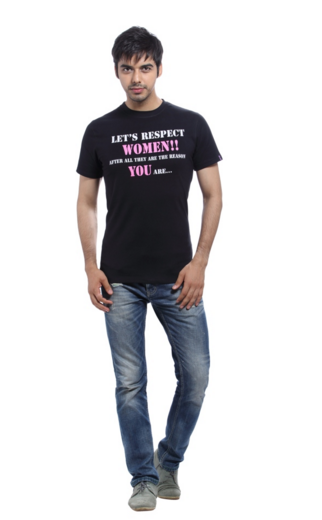
Bhavesh Sanghvi, Son of a renowned businessman and well-settled in life, was saturated with routine work-life. Bhavesh was not satisfied with what he was doing. Bhavesh always had a creative instinct within him and wanted to do something different. It was year 2011, and plenty of activities concerning social welfare were happening across the country including Jan Lokpal bill, Kudankulam Nuclear Power Plant and Mullaperiyar dam protests, 2G telecom, corruption in Commonwealth Games etc. Bhavesh was quite disturbed seeing these issues dominating headlines throughout the year. It was then, when Bhavesh decided to do something, and a noble thought occurred to him- “First, let’s change ourselves and then change society”. He quit his comfort to achieve what he has dreamt. He started to dedicate his time for social cause. Meanwhile, he was hunting for ways to effectively grab people’s mind. During one of his busy days, he noticed that printed t-shirt are one of the fastest, easiest, inexpensive and most readily available solution to a part of his quest- He says “if you wear a plain t-shirt, no one gives any attention but if put on a printed one, though involuntarily people tend to read what is scribbled on it.”
3
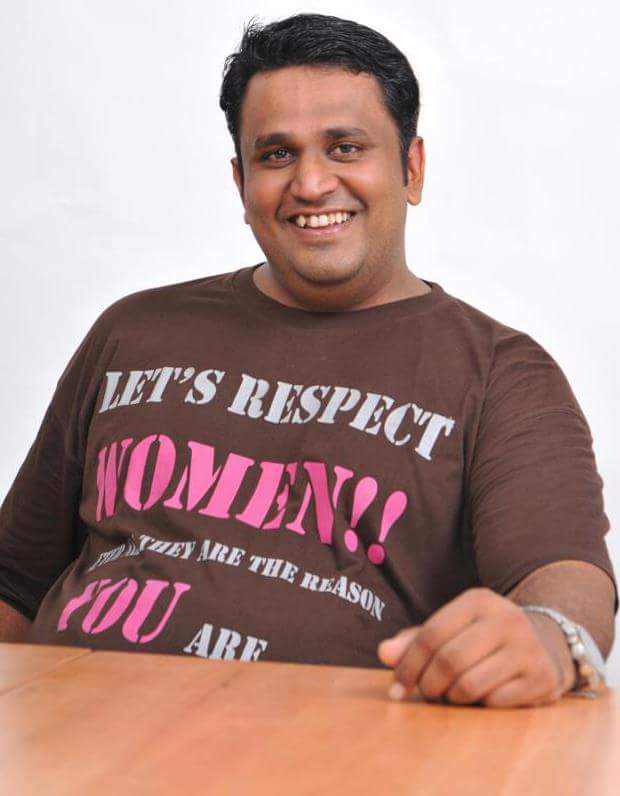
And that’s how Bhashan, a t-shirt brand, was incepted. Bhavesh Sanghvi is Founder and Owner of Bhashan T-Shirts. Bhashan was founded by Bhavesh in December, 2011 and ever from its inception it is encouraging youth to ‘wear the right words’. Bhashan T- shirts support’s ‘The Right to express what is wrong’ and trying to address social issues such as child labour, education, corruption, terrorism, poverty, global warming, Indian economy and drugs through catchy taglines (One-Liners).


Bhavesh chose T-shirt as a medium to highlight social iniquities, move the youth towards driving positive changes in the nation and encourage them for social entrepreneurship.​

Ups and Downs

The venture led by Bhavesh was in full swing and by the end of year 2013, Bhashan was selling t-shirts via Snapdeal, Flipkart, Paytm, and Shopclues. It was also doing business via outlets and retail stores. During the promotion, Bhavesh took one area at a time, visited major retail stores personally and explained the retailers with concepts behind each of the t-shirt. So far, he has covered more than 350+ stores in Mumbai, Goa, Delhi, Baroda, Pune, Kolhapur, Rourkela, Indore, Ahmadabad, Belgaum, and Kolkata. He had opened his first flagship store in Matunga, Mumbai. He was also associating with Media, Celebrities, and Radio Stations. Ever since its inception, Bhashan has sold more than 50,000+ t-shirts.


However, Life is not always what you want it to be and you are compelled to make decisions against your will. In 2013, due to personal difficulties, Bhavesh had to discontinue with his initiative and move to Dubai. During his one year stay in Dubai, he felt the same urge to do something creative and meaningful until ultimately he decided to move back to India to continue with his initiative. In April 2015, he revamped his venture and started its operations again. Now, Bhavesh is devoting all his time to promotions and funding for the venture and get everything on the track yet again. Currently, Bhavesh operates from his house in Vasi, Mumbai but he would be inaugurating his new office in Vasi itself on the occasion of Diwali.

Motivations in disguise of Challenges

Food, Shelter and Cloths are basic necessities of a human. People will not stop consuming foods, start to live on open or stop to wear clothes. Bhavesh comments that the T-shirt industry is going to go on and witness no hamper to its growth. Moreover, today everything is going online and this would just enhance sales. However, this does not hint that there are no challenges.


Bhavesh says that everyone wants to bring change. Everyone wants to voice their opinion. But when it actually comes to do something to bring forth that change, no one stands up for it.


It is a very popular belief that “What you wear depicts what you are”. Similarly, if someone is buying a t-shirt with some thought printed on it, that implies he supports the same. Moreover, if the thought happens to be a social message- people are more apprehensive and hesitant to buy it. Even if someone wants to buy it but is skeptical, he/she ends-up buying something else which is fancier. This behavior by customers also prompts retailers not to accept these t-shirts so easily.


Another critical challenge in the industry is payment delays by retailers. Bhavesh says that most of the payments are delayed due to involvement of middleman in the transaction. Bhavesh tackles this difficulty by removing any need of third-party and takes care of entire process himself.


Bhavesh acts as one man army- he does all the tasks himself including coming up with one-liners to promotion to sell to collection of the items. “I had everything anyone could wish for but I choose this over everything else as this gives me happiness. I am contented. When I actually use my creativity to bring about a change, I feel good about it. When I do something for society, I feel worth.” Says Bhavesh.


Bhavesh utilizes 50% of the profit for betterment of society- education, provide equipments to physically handicapped ones, fill ration in houses where there is no support and others. He has been doing this noble deed ever on a regular basis, individually.


Currently, the venture is operating with freelancers. Bhavesh says that he has not maintained a core designing team as it would restrict design possibilities to particular designer. As of now, the company is having seven freelancers who do design.


Bhavesh’s future plan is to come up with a shelter home for people who are mentally challenged, homeless. “I do not wish to be the cause to bring out the change around the world, I am contented even if I can get one person inspired by thoughts and affect many others in turn” says Bhavesh.

The GameChanger

FB_IMG_1437554916552


Bhavesh belongs to the band of successful young entrepreneurs in India. Bhavesh Sanghavi sparked off his career at the raw age of 20, when he joined the customer service department of a BPO. Later, he joined his family business of Imports of PVC Flooring and handled close to 400 clients and 5 Manufacturing Companies.


He also won the Award for Being the Youngest Successful Entrepreneur in Flooring Industry and achieving the impossible numbers of sales at the age of 23 for 6 years.


After gaining major success in the field of sales and marketing, Bhavesh always wanted to do something that is challenging, interesting and makes a difference in people’s lives on a daily basis. He chose concept driven T-shirt as a medium to spread social awareness.


Bhavesh also utilizes up to 50 percent of his profits for a social cause like sponsoring education of children from poor family, providing equipments to specially challenged people etc.


Source: Tech Story , 6th Nov 2015

15 more ‘Adarsh Stations’ in SWR - HUBBALLI- Karnataka

The South Western Railway has identified 15 more railway stations for development as ‘Adarsh Stations’ in addition to the list of 27 such stations.

Chairing the 16th Zonal Railway Users’ Consultative Committee meeting here recently, General Manager of South Western Railway, Pradeep Kumar Saxena, said Vijayapura, Belagavi, Savordem Curchorem, Ugar Khurd, Kudachi, Mallapur, Daroji, Kuppam, Davangere, Harihar, Subrahmanya Road, Hole Narsipur, Bantawala, Gudgeri and Neralakatte would be improved.


Of the total 76 km of track doubling targeted for completion this fiscal, work on Hosadurga-Chikjajur (28 km) line had been completed. The works on Yeliyur-Byadarhalli, Byadarahalli-Pandavapura and Pandavapura-Srirangapatna-Naganahalli (28 km) as part of Ramanagaram-Mysore (93 km.) doubling project; Yelahanka-Chennasandra (13 km) and Yeshwantpur-Yelhanda (07) km were targeted for completion by January 2016.


He said that during the first six months of the current fiscal, SWR had carried 19.76 million tonnes of freight and 96.13 million originating passengers, with gross earnings of Rs. 2,312.89 crore.


Regular cleaning of Koppal station, train reservation coach information system at platforms; foot over bridge ramp for differently abled passengers; improvement of Belagavi, Ghatprabha and Dharwad railway stations were the issues that came up for discussion. The general manager assured them of requisite action.


Source : The Hindu , 6th Nov 2015

Now, an iron mesh to separate men from women on RTC buses

The State Government, in order to prevent men from occupying seats reserved for women in APSRTC buses, now plans to set up an iron mesh separating the two seating enclosures.

In addition to this, efforts are on to make GIS installation mandatory in autos, cabs and transport vehicles.
APSRTC operates over 12,000 buses across the State, of which 1,300 are operated in the city such as Vijayawada and Visakhapatnam. This apart, 6,000 Telugu Velugu and 2,150 Express are operated in rural areas. There are complaints about men occupying seats reserved for women in buses, especially in city, Telugu Velugu and Express buses. To address the issue, the government is establishing iron mesh in buses.


These issues were discussed during a review meeting on women safety and physically challenged welfare by Chief Minister N. Chandrababu Naidu here on Thursday. He instructed the authorities to accord a top priority to women safety and welfare of the differently abled.


Emphasis should be laid on ensuring on ensuring the safety of women working in night shifts and directed the Police and IT departments to work in coordination. He wanted the authorities to focus on women trafficking, implementing POCSO Act, Nirbhaya Act.


For the convenience of physically challenged persons, a study centre would be established shortly in Vijayawada, besides setting up old age homes in every revenue divisions for senior citizens and physically challenged.


As a pilot project, four such homes should be established immediately at Visakhapatnam, Amaravati, Tirupati and Kurnool.


This apart, requisitions were sent to Centre for setting up an exclusive sports centre for physically challenged at Visakhapatnam, sensory park in Kurnool, Regional centre of National Institute for Disabled at Nellore, Braille printing press and Composite Regional Centre of National Institute for Hearing Impaired at Guntur district.


Efforts on to make GIS mandatory in autos, cabs and transport vehicles


Source : The Hindu , 6th Nov 2015

India denies any role in Nepal border disruptions - NEPAL

Stones and brick particles accumulated at the main road in Birgunj of Parsa district after the whole day's clash of Madhesi Front cadres with Police on Tuesday, November 3, 2015. Photo: Ram Sarraf

Stones and brick particles accumulated at the main road in Birgunj of Parsa district after the whole day’s clash of Madhesi Front cadres with Police on Tuesday, November 3, 2015.


India today said the problems facing Nepal are political in nature and the country should find a solution that is not based on force.


Giving its statement on the second Universal Periodic Review of Nepal in an interactive session of UN Human Rights Council in Geneva yesterday, India expressed concern about ‘lack of political progress” in Nepal, even after the death of more than 45 persons in the run-up to and after the adoption of the new constitution in September.
India also denied its role in any obstruction of supplies to Nepal and reiterated that it was due to the ongoing protests on the Nepalese side.

In the UPR session, Deputy Prime Minister and Foreign Minister Kamal Thapa, had yesterday highlighted the humanitarian crisis because of shortage of suppy of essential fuels and medicine from India to Nepal.

India requested that constitution building and democratisation process be consolidated by accommodating all section of Nepali society and urged effective functioning of the Truth and Reconciliation Commission, and strengthening of National National Human Rights Commission.


Meanwhile, the UK expressed its concern about discrimination against women in the citizenship provisions in the new constitution and urged the government to ensure independent investigation on the violence in the run up and after the adoption of the statute.


It also expressed serious exception to the amnesty provisions in the TRC mechanism.


The UK also urged the government to remove, or at least extend, the 35-day statute of limitation for reporting rape cases and urged it to set up a complaint commission to investigate and prosecute the complaints against security forces.


The United States delegates said religious freedom should be protected, whereas the Chinese delegates who took part in the interactive session stressed the need to ensure quality education and rights of physically challenged people.


Likewise, the delegate of Brazil and Spain raised concern about violence against women, Madhesis and Janajatis and mad an appeal for strengthening the NHRC to protect the basic rights of people.


Delegates from 79 countries took part in the interactive dialogue with the Nepali delegation, and provided constructive comments and recommendations to further promote human rights in Nepal, according to a statement issued by the Permanent Mission of Nepal to the United Nations in Geneva.


During their observation, most delegates appreciated the adoption of the new democratic constitution that incorporates democratic norms and values and the progressive provisions of fundamental rights and freedoms, it added.

In his concluding remarks following the interactive session, DPM and Foreign Minister Kamal Thapa thanked the delegates for their constructive participation and assured the international community about the government’s commitment to reviewing and revising the existing laws as well as developing new legislative frameworks for effectively implementing all the provisions of the new constitution.


Source : The Himalayan Times , 6th Nov 2015

Mega infra projects lined up: KTR - Hyderabad


Mega infra projects lined up: KTR


IT Minister K. Tarakarama Rao obliges a physically-challenged person’s request for a selfie at the HYSEA summit in Hyderabad on Wednesday.— Photo: Nagara Gopal Rs. 35,000 to be spent for roads and flyovers and an equal amount for water supply The State government will lay roads in rural areas at a cost of Rs. 15,000 crore and build flyovers and sky walks in the city spending another Rs.

20,000 crore, said State IT Minister K. Tarakarama Rao here on Wednesday. Addressing delegates at the Hyderabad Software Enterprises Association’s (HYSEA) Annual CSR Summit here on Wednesday, Mr. Rao stated, “When we took over there was erratic power supply, but now we are almost self-sufficient.” He also mentioned that the State government will take up drinking water projects worth Rs. 35,000 crore to supply water to 8.5 million rural households. Mr.

Rao also said that Hyderabad will receive more drinking water supply from the Krishna phase-3 by November 15 and also from the Godavari phase-1 project by December. “We are also trying to ensure that Gram Panchayats have their own plan to complete the project. We have tied up for funds from the Central government, State government,” he said. “We also constructed 12,500 toilets in Sircilla, the village I adopted, and we will construct water harvesting structures there soon,” said Mr. Rao, adding that he wanted HYSEA and other industry members to work with local bodies.. .


Source : NYOOOZ, 5th Nov 2015

Financial assistance for physically challenged girl - UP

Uttar Pradesh Chief Minister Akhilesh Yadav today announced a financial assistance to a physically challenged girl from Bijnor and said his government was ready to extend all possible support for rehabilitation of physically challenged persons.

The Chief Minister met Akanksha Chaudhary, a BA third year student at Vardhaman degree college and announced a financial aid of rupees one lakh, an official spokesman said.

On the initiative of Akhilesh Yadav, Akanksha was fitted with an prosthetic limb at Shakuntala Mishra Rehabilitation University yesterday.

The CM said his government was ready to extend all possible support for rehabilitation of physically challenged persons.

He said that a fresh speed could be brought in the development of the state by bringing physically challenged persons in the mainstream of the society.

Akanksha, while expressing her gratitude towards the CM, said his initiative has created a new hope and confidence among physically challenged persons.


Source : PTI News , 7th Nov 2015